AI Actor in Motion Pictures
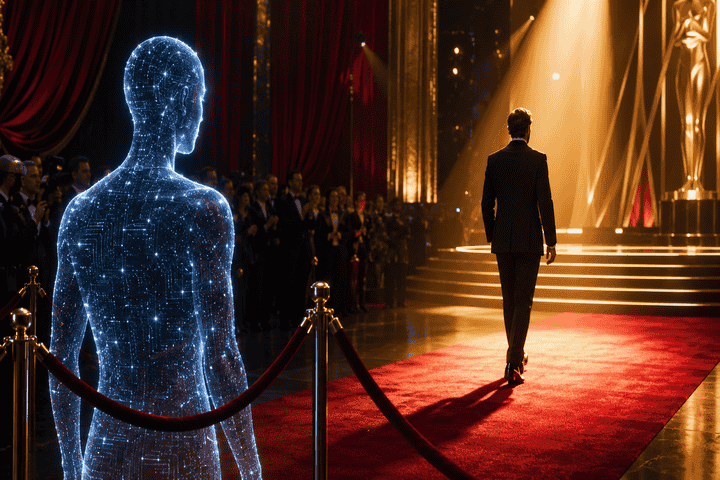
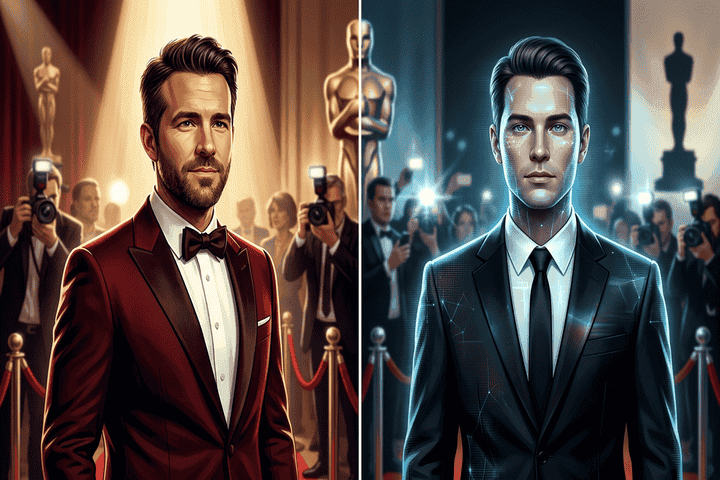
When the Academy of Motion Picture Arts and Sciences (AMPAS) announced restrictions barring films featuring AI-generated performers or AI actors from award consideration, it sent a shockwave through boardrooms, studio lots, and film schools worldwide. For students of mass communication and media business, this is not merely a Hollywood headline—it is a case study in how institutional power shapes the boundaries of creativity, authorship, and labor in the digital age.
As generative artificial intelligence (GenAI)—technology capable of producing synthetic human likenesses, voices, and performances from data inputs—moves from experimental novelty to production-ready tool, the entertainment industry faces an existential question: What does it mean to be a performer when a machine can replicate one convincingly?
The decisions made by AMPAS and the Hollywood Foreign Press Association (HFPA), the body behind the Golden Globe Awards, represent the first major regulatory salvo in what promises to be a prolonged battle. These policies formally exclude AI-generated performers from eligibility, drawing a hard line between synthetic and human labor.
This article examines the foundations of this regulatory contention across four dimensions:
- the policy decisions themselves and their immediate context
- the intellectual property and legal frameworks they invoke
- the socio-economic consequences for global and Indian film industries
- the broader industry insights that will shape the future of cinematic recognition
Understanding this debate is essential for anyone entering media management, content production, or entertainment law in an era where the line between human and algorithmic creativity grows thinner by the year.
Key Highlights
Policy Restriction with Institutional Weight: AMPAS and the HFPA have formally barred films featuring AI-generated performers or AI actors from award eligibility, establishing the first explicit biological-labor threshold in the history of major cinematic recognition—a decision with direct implications for India’s official submission to the Academy Awards (Oscars) for the Best International Feature Film chosen by the Film Federation of India (FFI).
Legal Precedent and Indian Context: Actor Amitabh Bachchan’s 2022 landmark injunction against unauthorized AI use of his likeness mirrors the intellectual property concerns driving global policy, demonstrating that Indian courts are already engaging with the legal frameworks this debate invokes.
Economic Stakes for Indian Labor: With over 1,800 films produced annually across Indian industries and organizations like the Cine and TV Artistes Association (CINTAA) and the Federation of Western India Cine Employees (FWICE) representing thousands of daily wage workers, the socio-economic consequences of unchecked AI performer adoption in India could be severe—making proactive regulatory engagement a business and ethical imperative.
The Policy Landscape: Human vs AI Actor
The convergence of generative AI with cinematic production has forced major award-governing bodies to act with unusual speed. In 2024, both AMPAS—the organization behind the prestigious Oscar Awards—and the HFPA formally codified restrictions preventing films that rely on AI-generated performers from competing in major acting and production categories.
This marks the first time in the history of institutional film recognition that eligibility criteria have been explicitly defined by the biological nature of the performer rather than the quality of the performance itself.
To understand why this matters, it is important to clarify what AI-generated performers are. Using tools such as Runway ML, Synthesia, or proprietary studio software, filmmakers can now generate photorealistic digital humans capable of delivering scripted dialogue, emoting, and performing physical actions—all without a human actor ever setting foot on set.
Studios like 20th Century Studios and Warner Bros. have already experimented with de-aging technology and digital doubles, while companies such as Metaphysic AI gained public attention for creating hyper-realistic synthetic versions of existing celebrities.
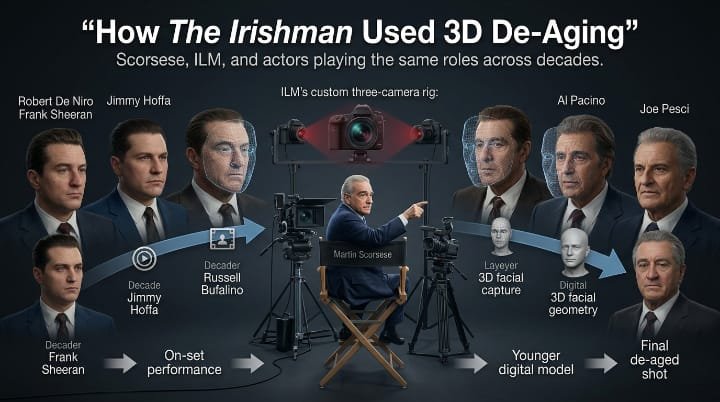
Director Martin Scorsese utilized extensive 3D de-aging technology in The Irishman (2019), so Robert De Niro, Al Pacino, and Joe Pesci could play their characters across several decades.
The policy interventions work on three levels:
1. Eligibility Restriction: Films in which primary or significant performances are generated entirely by AI are disqualified from acting award categories, regardless of directorial or technical merit.
2. Human Contribution Threshold: Productions must demonstrate meaningful human creative participation — not merely oversight — to qualify, shifting the burden of proof onto filmmakers.
3. Documentation Requirements: Submitting studios may be required to disclose the extent of AI usage in their production pipeline, creating a new layer of institutional transparency.
In India, where the Central Board of Film Certification (CBFC) and bodies like the Film Federation of India (FFI) govern content and representation at international festivals, this global precedent is being watched closely. The FFI selects India’s entry for the Academy Award for Best International Feature Film, and any alignment with AMPAS eligibility norms could soon shape domestic policy conversations as well.
Authorship, Authenticity, and the Legal Framework
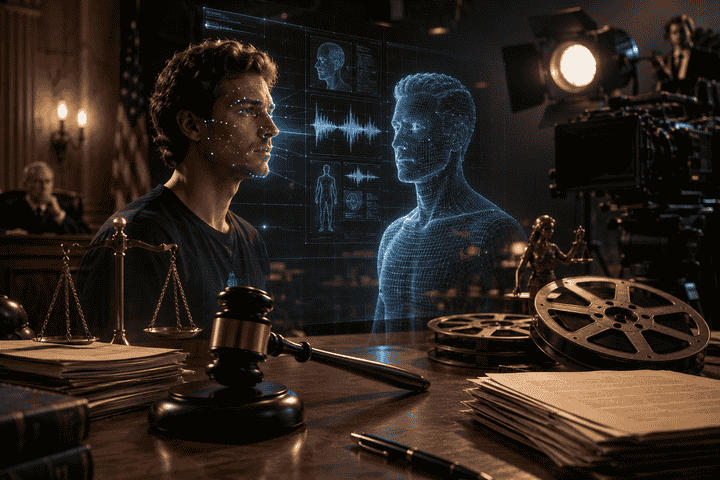
At the heart of this regulatory contention lies a profound legal and philosophical question: who — or what — can be considered the author of a creative work? This question has implications far beyond award eligibility; it touches the foundations of intellectual property law, actors’ rights, and the definition of creative labor itself.
Under current copyright frameworks in most jurisdictions, including India’s Copyright Act of 1957, copyright protection is extended to works created by human authors.
The United States Copyright Office has similarly clarified, through its 2023 guidance, that works generated autonomously by AI without sufficient human creative input are not eligible for copyright protection. This creates an immediate paradox: a film featuring an AI actor may be commercially distributed but legally unprotected in the most valuable sense.
The policy decisions by AMPAS and HFPA effectively navigate this legal grey zone by sidestepping the copyright debate entirely and instead establishing an industry-level standard. Key legal dimensions include the following:
1. Likeness Rights and Consent: If an AI performer is modeled on a real actor’s likeness—their face, voice, or mannerisms—without explicit contractual consent, it implicates personality rights and right-of-publicity laws. In India, courts have increasingly recognized personality rights; actor Amitabh Bachchan successfully obtained an injunction in 2022 against unauthorized use of his voice and image, setting a landmark precedent.
2. Labor Protections and Union Contracts: In the United States, the Screen Actors Guild-American Federation of Television and Radio Artists (SAG-AFTRA) strike of 2023 was partly motivated by fears of AI replacement. The resulting agreements mandated consent and compensation for AI-generated likenesses—protections that AMPAS policy reinforces institutionally.
3. Attribution and Moral Rights: Under Indian copyright law and the Berne Convention (to which India is a signatory), moral rights protect an author’s connection to their work. AI-generated content complicates attribution, raising questions about who bears creative and legal responsibility.
The AMPAS and HFPA policies thus serve as a de facto regulatory mechanism, filling gaps that formal law has yet to address comprehensively and signaling to the industry that human authorship remains the gold standard for institutional validation.
Labor, Markets, and the Indian Film Industry
The economic stakes of this regulatory debate extend well beyond Hollywood. The global film industry was valued at approximately USD 95.45 billion in 2022, with projections suggesting continued growth driven in part by streaming platforms (Grand View Research, 2023).
The introduction of AI performers represents both a cost-reduction opportunity and a potential disruption to the labor market that sustains millions of workers — from lead actors to background performers, voiceover artists, and motion-capture technicians.
For the Indian film industry—the world’s largest by volume of productions, with Bollywood, Tollywood, and regional industries collectively releasing over 1,800 films annually—these policy shifts carry particular significance:
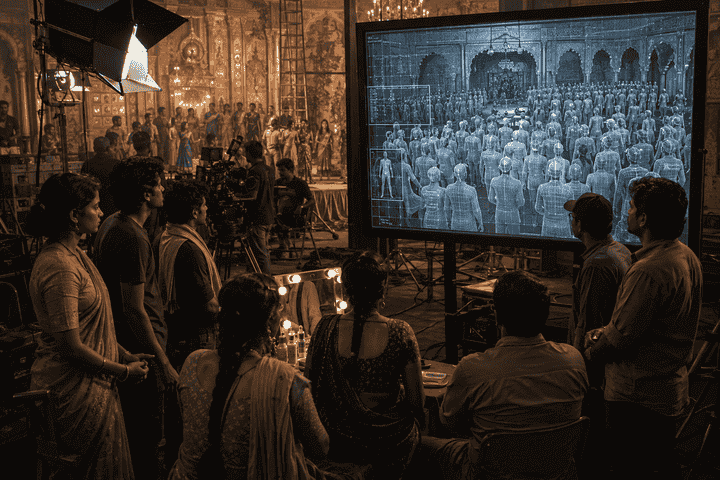
1. Impact on Background Performers and Junior Artists: Unlike lead stars, junior artists and background performers have limited bargaining power. AI tools capable of generating crowd scenes or minor characters could displace thousands of daily-wage workers who depend on film sets for their livelihoods. CINTAA and FWICE have begun internal discussions on this threat, though formal policy responses remain nascent.
2. Streaming Platforms and Regulatory Arbitrage: With platforms like Netflix India, Amazon Prime Video India, and JioHotstar operating under lighter regulatory frameworks than theatrical releases, there is a risk of ‘regulatory arbitrage’—where AI-heavy productions migrate to streaming to avoid award-eligibility scrutiny while still reaching mass audiences.
3. The Dual Economy of AI Adoption: Major production houses such as Yash Raj Films and Dharma Productions have the resources to experiment with AI tools responsibly, potentially enhancing production value. Smaller regional studios, however, may face pressure to adopt AI as a cost-cutting measure, creating a two-tier industry where quality and labor standards diverge sharply.
The tension, therefore, is not merely artistic—it is structural. Policymakers, industry bodies, and educational institutions preparing the next generation of media professionals must engage seriously with the economic architecture that these technological and regulatory shifts are reshaping.
Global Precedents and the Future of Cinematic Recognition
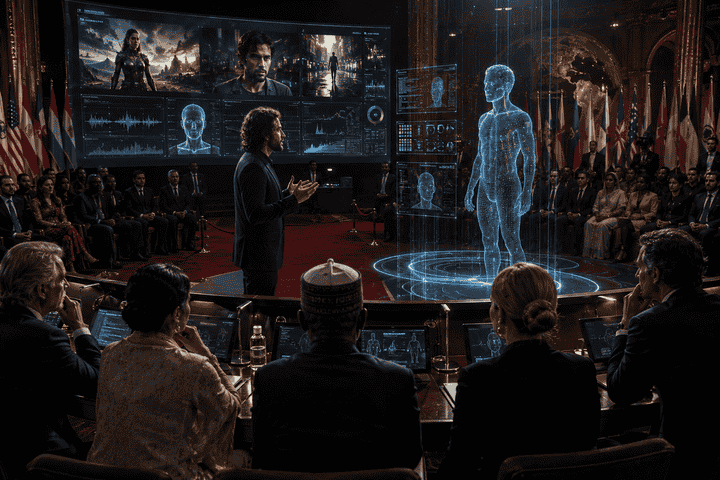
The AMPAS and HFPA decisions do not exist in isolation. They are part of a broader global conversation about how institutions should govern the intersection of artificial intelligence and creative industries. Several parallel developments provide important context for media and business students:
First, the European Union’s AI Act (2024), the world’s first comprehensive AI regulatory framework, classifies certain AI applications in creative industries as ‘high risk,’ requiring transparency disclosures and human oversight. This aligns philosophically with the AMPAS approach of centering human agency.
Second, the Cannes Film Festival, one of the most prestigious platforms for international cinema, has not yet issued a formal ban but has indicated that films relying heavily on AI in their creative process will face heightened scrutiny during jury deliberations — a softer but still significant normative signal.
Third, within India, the FICCI-EY Media and Entertainment Report 2024 highlighted AI as both an ‘opportunity and a disruption vector’ for the Indian M&E sector, noting that the industry must develop governance frameworks that protect creative labor while enabling technological innovation.
The report estimated that AI-related tools could reduce certain production costs by 20-30% over the next five years — a figure that underscores both the appeal and the peril of rapid adoption.
Key industry insights for media professionals include the following:
1. Normative Standard Setting: Award bodies function as norm entrepreneurs — their eligibility criteria shape industry behavior far beyond the awards themselves, influencing what gets financed, produced, and distributed.
2. The Authenticity Premium: As AI-generated content becomes more prevalent, human-crafted performances may command a cultural and commercial premium, much as handmade goods acquired renewed value in the age of mass manufacturing.
3. Institutional Adaptation: Organizations like AMPAS will need to develop sophisticated technical verification mechanisms—potentially including AI-detection tools—to enforce their own policies as the technology evolves.
For students of media management and mass communication, these developments highlight the increasingly strategic role that regulatory and institutional decisions play in shaping market dynamics.
Executive Summary
The exclusion of AI-generated performers from major film awards is, on the surface, a story about Hollywood policy. At a deeper level, it is a story about power — who gets to define creativity, who benefits from technological disruption, and who bears its costs.
For students of mass communication, media management, and entertainment business, this case offers a masterclass in how institutional decisions function as regulatory instruments, shaping markets, labor practices, and cultural values simultaneously.
The decisions made by AMPAS and the HFPA are unlikely to halt the march of generative AI in film production. What they will do is create a tiered landscape: productions that aspire to institutional prestige will be compelled to center human creative labor, while AI-driven content finds its audience through less regulated channels such as streaming platforms and direct-to-digital releases.
For India—a country with the world’s most voluminous film industry, a growing digital media economy, and a workforce deeply invested in the creative arts—the stakes are particularly high. Industry bodies, policymakers, and educators must move beyond reactive responses to develop proactive governance frameworks that balance technological innovation with the protection of creative labor.
As the FICCI-EY Report 2024 makes clear, the question is not whether AI will transform the Indian media and entertainment sector, but whether that transformation will be guided by frameworks that serve the many or the few. The regulatory contention unfolding in Hollywood today is, in many ways, a preview of debates that will define Indian media policy in the decade ahead.
References & Citations
U.S. Copyright Office: Copyright and Artificial Intelligence (2023) (report)
Grand View Research: Entertainment Market Size & Share Report, 2023-2030 (report)
SAG-AFTRA AI Agreements and Interim Agreements (2023) (article)
European Union Artificial Intelligence Act (regulation)
Related Reading
Copyright in the Age of Streaming: What Indian Content Creators Need to Know (Intellectual Property in Digital Media)
Generative AI and the Future of Content Creation in Indian Broadcasting (Generative AI in Media Production)
The Economics of the Indian Film Industry: Structure, Finance, and Distribution (Media Industry Labor Economics)
How Film Festivals and Awards Shape Box Office Success: A Media Business Perspective (Film Awards and Institutional Power)