What the 12 Minute Ad Cap Was
Indian television primarily sells time rather than space. Its inventory is measured in seconds, with pricing based on slots and audience ratings. For two decades, a single number determined how much of this inventory a channel could offer.
The 12 minute ad cap restricted each clock hour to twelve minutes of ads, divided into ten minutes of commercials and two minutes of channel self-promotion. A clock hour starts exactly at the top of the hour. Any unused minutes can’t be carried over to a more popular time later in the day.
The Ministry of Information and Broadcasting deleted that provision on 21 August 2026. Trade coverage saw this as the end of the rule, but the legal situation is more complex. This case is particularly important for anyone studying Indian media regulation, as understanding the full picture helps clarify ongoing discussions.
Broadcasters spent thirteen years litigating in court, claiming that a telecom regulator had no authority to count their commercial breaks. They lost this legal fight in May 2026, but three months later, they won when the government repealed the rule through an executive notification.
Three bodies share oversight of Indian television advertising.
- The Advertising Standards Council of India is a voluntary self-regulatory body that rules on whether an advertisement is misleading, offensive, or unsafe.
- The Ministry of Information and Broadcasting administers the Programme Code and the Advertising Code under the cable television framework.
- The Telecom Regulatory Authority of India regulates duration, treating advertising density as a quality-of-service question.
Content, conduct, and duration fall under different authorities. This division explains why the cap rested on two separate instruments and why repealing one did not eliminate the restriction entirely.
Two Rules, Two Regulators, One Ceiling

The first instrument was Rule 7(11) of the Cable Television Networks Rules, 1994, inserted in 2006. Rule 7 as a whole is the Advertising Code, outlining permissible content for advertisements. Specifically, sub-rule 11 focused on duration and included the ten-plus-two split.
The second instrument came from TRAI six years later. The Standards of Quality of Service (Duration of Advertisements in Television Channels) Regulations, 2012, were framed under Section 36 read with Sections 11(1)(b)(i) and (v) of the TRAI Act, 1997, and notified on 14 May 2012.
The First Amendment Regulation of 2013 then substituted Regulation 3 entirely, with effect from 22 March 2013. The substituted Regulation 3 is expressed in a single sentence. No broadcaster shall, in its broadcast of a program, carry advertisements that exceed twelve minutes in a clock hour.
An explanation defines the clock hour as sixty minutes running from 00.00 to 00.60, giving 14.00 to 15.00 hours as the worked example.
That wording carries no cross-reference to Rule 7(11). It does not mention the Cable Television Networks Rules. It does not repeat the ten-plus-two split.
TRAI stated the ceiling in its own terms, under its own statutory powers. The 2013 amendment also inserted two further provisions that remain in force.
Regulation 4 permits TRAI to issue orders or directions to protect subscriber interests or to secure compliance. Regulation 5 requires every broadcaster to file details of advertisements carried on its channel with TRAI within fifteen days of the end of each quarter.
TRAI’s authority over broadcasting rests on one administrative act. A notification dated 9 January 2004, published as S.O. 44(E) and 45(E), brought broadcasting and cable services within the definition of telecommunication services under Section 2(1)(k) of the TRAI Act.
All subsequent jurisdictional disputes centered on the scope of that notification. Enforcement lagged behind the rule by several years. During the pending challenge, interim court protections shielded broadcasters, and channels often exceeded twelve minutes.
In November 2025, TRAI issued show-cause notices to major broadcasters and requested the court to revoke that protection.
How Courts Test a Media Regulation
Four questions determine most of the challenges to Indian media regulation.
- Does the regulator have jurisdiction?
- Does the rule touch content or only form?
- Is the resource being regulated public or private?
- Whose right is actually restricted?
The advertising cap litigation addressed all four together, making it a useful teaching case. Broadcasters first went to the Telecom Disputes Settlement and Appellate Tribunal.
That route closed when the Supreme Court held in Bharat Sanchar Nigam Limited v. TRAI that the tribunal cannot rule on the constitutional validity of TRAI regulations.
Under Article 226, litigants bring constitutional challenges before the High Court. Disputes over the validity of a regulation go to TDSAT. On jurisdiction, the question is what the parent statute empowers.
Section 11(1)(b)(v) of the TRAI Act makes TRAI responsible for quality-of-service standards protecting consumer interests. Section 36 allows regulations to implement the Act’s objectives.
Broadcasters argued that quality of service covers only technical matters such as signal strength. The Delhi High Court rejected that view.
In a time-based medium, the frequency and density of advertising shape the viewing experience, which is the service.
The medium-difference argument was significant. A newspaper reader turns the page. A digital viewer skips or fast-forwards. A television viewer watching scheduled programming cannot avoid the break.
That asymmetry is why a duration rule is defensible for broadcast and would be far harder to defend for print. On free speech, petitioners relied on Tata Press Ltd. v. MTNL, where the Supreme Court held that Article 19(1)(a) protects commercial speech.
The court accepted the precedent and distinguished the claim. Lost advertising revenue is a complaint about the freedom to carry on business under Article 19(1)(g), not about expression.
Content neutrality helped clarify the Article 14 question. The cap set a clear limit on how much advertising a channel could have without changing the message of any individual advertisement.
Classifying entertainment, news, and regional channels under a uniform ceiling was a reasonable choice rather than an arbitrary decision. The strongest point was the public-resource argument.
The state holds spectrum and airwaves as scarce public resources in trust. Their use must serve the common interest under Articles 39(b) and 39(c), and Article 31-C shields laws advancing those directives from certain challenges.
Broadcasters do not have an unlimited right to commercially exploit spectrum. Newspapers use private presses and private paper. Broadcasters use a public resource under license.
The judgment was delivered on 29 May 2026 by a division bench of Justice Anil Kshetarpal and Justice Amit Mahajan and was re-uploaded on 8 July 2026 after corrections.
It dismissed seventeen writ petitions filed in 2013 by 9X Media, B4U Broadband, Sun TV Network, Eenadu Television, the News Broadcasters Association, and others.
The lead matter was 9X Media v. TRAI, W.P.(C) 7982/2013. Thirteen years separated the filing from the verdict. The court upheld both Rule 7(11) and the TRAI regulations.
Television’s Revenue Structure and the Cost of a Ceiling
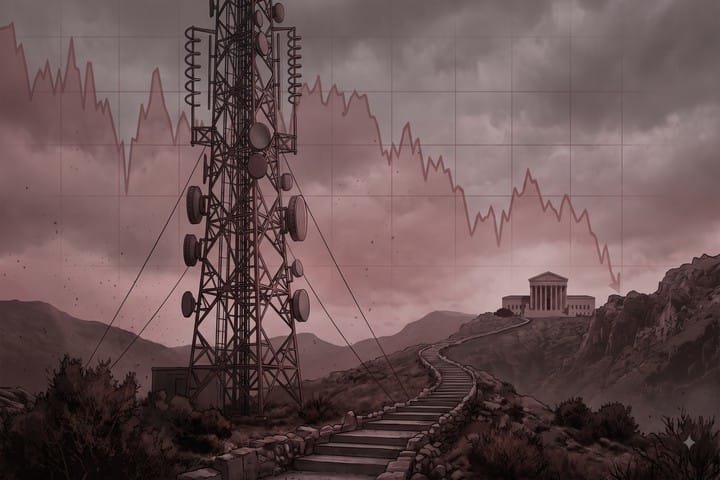
A television channel generates revenue from two sources: subscription fees paid by viewers via distribution platforms and advertising income from brands purchasing airtime.
The way these factors balance out strongly affects how much a ceiling can hurt, and the impact varies widely by channel type. For free-to-air channels, which rely entirely on advertising, every minute that’s capped means lost income.
Pay channels are more stable, with industry estimates indicating that advertising accounts for 50 to 70 percent of revenue, depending on the genre. News channels, however, face the most challenging calculations.
They informed the court that subscription charges under TRAI’s tariff system vary from 25 paise to Rs 3.5 per month, with advertising serving as their primary source of income.
The exposure was extensive. As of December 2025, TRAI data listed 335 pay channels and 576 free-to-air channels. A single ceiling was imposed on over 900 channels that operate under very different financial models.
The FICCI-EY Media and Entertainment report for 2026 estimates that linear television revenue at Rs 61,700 crore in 2025, comprising Rs 26,300 crore from advertising and Rs 35,400 crore from subscriptions.
These figures represent net revenue. Estimates of gross billings in the same market are around Rs 40,000 crore, which helps explain the wide variation in published Indian television advertising numbers. Both revenue streams declined over the year.
Television advertising declined by more than 10 percent and subscription by 8 percent. Digital media revenue crossed Rs 100,000 crore over the same period, with digital advertising reaching Rs 94,700 crore and taking 63 percent of all advertising spend in India.
TAM AdEx saw a 7 percent decline in television advertising volumes from January to July 2026. Distribution reflected the same trend.
An All India Digital Cable Federation report tracked a decline in pay-TV households from 151 million in 2018 to 111 million in 2024. It projects a further decline to 71-81 million homes by 2030.
Television was gradually losing advertising share to digital platforms, especially as a regulator set limits on its remaining inventory. However, it’s important to note that the cap was introduced back in 2006, and the ongoing decline appears to be more about audiences shifting away rather than a lack of available viewing time.
Why the Government Removed the Cap

On 14 August 2026, the Ministry of Information and Broadcasting announced its decision, citing the significant changes in the sector as the main reason.
In 2006, India had 62 television channels when the cap was introduced. Today, that number has grown to over 900. At that time, cable TV was analog, offering limited bandwidth and few viewing options.
Digitization removed that constraint. DTH, cable, HITS, and IPTV are all digital platforms that carry between 300 and 500 channels or more.
The ministry concluded that competition within television and between television and digital media had become adequate on its own.
The second argument was parity. Indian television depends on advertising whether a channel is pay or free-to-air. Digital platforms carry no equivalent ceiling.
The ministry called the situation a lack of a level playing field and framed removal as a step toward fair competition. Information and Broadcasting Minister Ashwini Vaishnaw conveyed the decision to a delegation from the News Broadcasters Federation led by its founding president, Arnab Goswami.
Delegations from the News Broadcasters and Digital Association and the Indian Broadcasting and Digital Foundation had also pressed the case.
The industry did not speak with one voice. The Indian Society of Advertisers supported raising the ceiling to 25 percent of a clock hour, which amounts to 15 minutes.
The Advertising Agencies Association of India argued for a market-led approach with no prescribed duration. Broadcaster bodies wanted complete freedom from restrictions.
The government chose the most sweeping option available. The Gazette notification followed on 21 August 2026 as G.S.R. 751(E), issued under Section 22 of the Cable Television Networks (Regulation) Act, 1995.
The Cable Television Networks (Amendment) Rules, 2026, state that in rule 7, sub-rule (11) shall be omitted. The amendment came into force on the date of publication. It substitutes no new ceiling in place of the old one.
What Survives the Repeal

The amendment applies to a single instrument. It omits Rule 7(11) of the Cable Television Networks Rules and avoids mentioning TRAI. The ten-plus-two split is clearly abolished.
That division lived inside the Advertising Code and had no separate legal home. Channels are no longer required to reserve two minutes for self-promotion or to hold commercials for ten.
The twelve-minute total is a different question. Regulation 3 of the 2012 Regulations states that ceilings are independent. It draws authority from the TRAI Act rather than the Cable Rules, and the court upheld it on that footing in May 2026. Nothing in the August notification touches it.
TRAI’s consolidated regulations page continued to list the 2012 regulations as a live instrument on the day the Gazette notification appeared. The most recent TRAI regulation of any kind at that date was dated 14 May 2026, and no press release addressed advertisement duration.
There are two additional obligations that accompany it. Regulation 4 preserves TRAI’s power to issue directions on compliance. Regulation 5 requires quarterly advertising returns from every broadcaster within 15 days of the end of each quarter. Neither depends on Rule 7(11).
The government’s intention is clear: the Ministry prefers market-determined durations, and TRAI is likely to follow by repealing existing rules. Typically, TRAI issues a consultation paper before changing regulations, which means the process usually takes several weeks or months instead of just a few days.
Conclusion
The advertising cap resembles a small technical regulation. It serves as a useful case study on how much a regulator can influence a private business that relies on a public resource.
Three principles remain intact after the repeal.
- A regulator’s jurisdiction is determined by the purpose of its parent statute rather than a narrow view of its initial scope.
- Regulations concerning advertising volume tend to be easier to enforce than those related to advertising content.
- The spectrum held in public trust grants the state more room in broadcasting compared to print media.
These principles endure beyond this dispute. They already influence India’s approach to regulating digital platforms, especially as the public-resource argument becomes less compelling and content-related issues become more prominent.
For broadcasters, the commercial position has loosened while the legal status is still uncertain. The ten-plus-two framework has been eliminated.
The overall trend remains unchanged: digital advertising continues to expand, television’s market share declines, and adding more minutes will not necessarily boost demand.
References
- Press Information Bureau (14 August 2026). Government Removes 12-Minute Advertisement Duration Cap for Television Channels, Release ID 2299626
- exchange4media (22 August 2026). MIB formally scraps 10+2 TV ad cap, gives broadcasters greater monetisation freedom
- TRAI. Standards of Quality of Service (Duration of Advertisements in Television Channels) Regulations, 2012, consolidated with the First Amendment Regulation, 2013
- LiveLaw. Delhi High Court dismisses broadcasters’ challenge to TRAI’s 12-minute per hour cap on TV advertisements, 2026 LiveLaw (Del) 636
- EY India. FICCI-EY Media and Entertainment Report 2026
- The Week (22 August 2026). Centre removes 12-minute ad cap for television channels
Key Highlights
- The 12 minute ad cap limited Indian television to twelve minutes of advertising per clock hour, made up of ten minutes of commercials and two minutes of self-promotion. It was introduced in 2006 through Rule 7(11) of the Cable Television Networks Rules, 1994.
- The 12 minute ad cap rested on two instruments. Rule 7(11) carried the ten-plus-two split. Regulation 3 of TRAI’s 2012 quality-of-service regulations, as substituted in 2013, independently stated the twelve-minute ceiling under the TRAI Act.
- On 29 May 2026, the Delhi High Court upheld both instruments and dismissed seventeen petitions filed in 2013. It held that the spectrum is a public resource held in trust under Articles 39(b) and 39(c), and that revenue claims fall under Article 19(1)(g) rather than Article 19(1)(a).
- The Ministry of Information and Broadcasting notified G.S.R. 751(E) on 21 August 2026, omitting Rule 7(11). The ten-plus-two split ends. TRAI’s Regulation 3 was not repealed, leaving the twelve-minute total legally unsettled until TRAI acts.
- Linear television revenue stood at Rs 61,700 crore in 2025, according to FICCI-EY net figures, split between Rs 26,300 crore in advertising and Rs 35,400 crore in subscription. Digital advertising reached Rs 94,700 crore, taking 63 percent of all Indian advertising spend.