
This article contains affiliate links. As an Amazon Associate, Indian Media Studies earns from qualifying purchases at no extra cost to you.
Indian Theatre Introduction
India is a land of countless stories, largely because of its rich cultural diversity. For centuries, people have shared these stories through music, dance, drama, puppetry, and other performing arts.
Drama was one of the most popular forms of storytelling in ancient India. Sanskrit drama developed over roughly a thousand years rather than during a single century. Bhasa, one of the earliest known Sanskrit playwrights, is generally placed in the 2nd or 3rd century CE. Kalidasa followed in the 4th or 5th century, Shudraka around the 5th century, Vishakhadatta sometime between the 4th and 8th centuries, and Bhavabhuti in the 8th century.
Emperor Harsha, who ruled from 606 to 648 CE, is credited with three surviving plays. Together, the works of these writers became as important and influential as those of other major theatrical traditions around the world.
Ancient texts also suggest that theatre existed as an aesthetic practice on the Indian subcontinent from the dawn of civilization.
Natyasastra
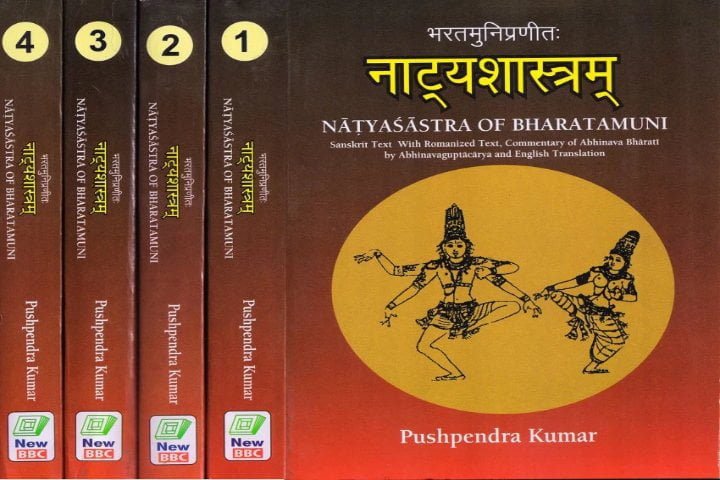
The Natyasastra, written by Bharat Muni, is the first text in the history of Indian theatre to explore the minds of performers. It also explains in detail the types of people involved in dramatic performances.
The text was written to clarify the Natyaveda, which was considered a manual for theatre workers and performers in ancient India.
In addition to storytelling, ancient Indian dramatic art emphasized the importance of performers. This focus is believed to be one reason these dramas became so popular.
The text raises several important questions about performers:
- How did they think?
- What was their approach to acting?
- How did they communicate with the audience?
- How did they understand and analyze society?
The Natya Shastra carefully describes ten classifications of drama, ranging from one-act plays to ten-act epics. It serves as a comprehensive guide for playwrights, directors, and actors, the three essential elements involved in creating a dramatic performance.
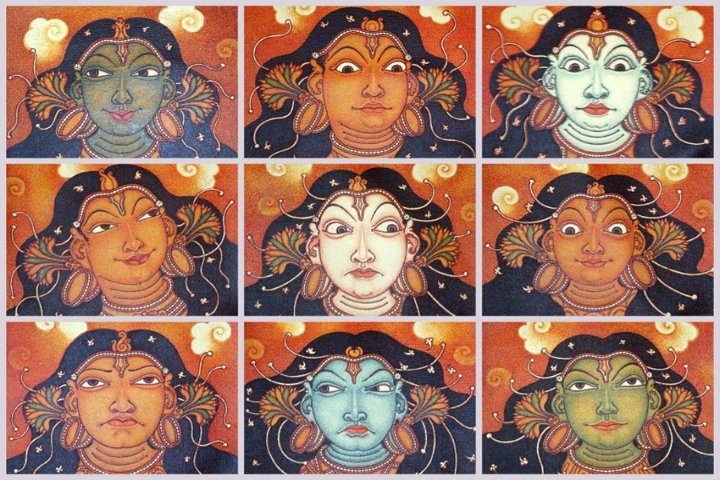
The Natyashastra also identifies the different roles within a theatre company, extending beyond the actors. Three terms are widely recognized across translations:
- Sutradhara: The director of the performance
- Nata: The actor-dancer
- Vidushaka: The jester
The text also names several specialized roles connected with music, costumes, ornaments, and set decoration. Translations of some of these technical terms vary between editions. The following list uses one commonly cited interpretation:
- Bharata: A stage manager, producer, or multidimensional person capable of performing all production-related duties
- Vidusaka: A person who makes fun of others, or a jester
- Tauripta: A person skilled in music and an expert in musical instruments
- Nata: A person who performs as an actor-dancer
- Sutradhara: The director, responsible for applying songs and music during the performance
- Natyakara: The playwright, who expresses the different rasas and bhavas found among people through various characters
- Nandi: A person who offers praise in Sanskrit or Prakit
- Nayaka: A person responsible for directing dance during a performance
- Mukutakara: A person who makes headgear for each character
- Abharanakara: A person who makes ornaments for a performance
- Malyakara: A person who makes garlands for the characters
- Vesakara: A person who makes costumes for a performance
- Chitrakara: A person responsible for painting for the performance
- Rajaka: A person responsible for cleaning the costumes
- Karukara: A person who decorates the hall with wooden idols or sculptures
- Kusilava: A person who can dance and play musical instruments during a performance
This list helps to understand the many people and skills needed to form a theatre group. The Natyasastra names every type of supporting work considered necessary for a performance, not only acting.
For this reason, Rajakas and Malyakaras were respected members of the theatre group even though they did not perform on stage. They can be understood as theatre staff or specialists associated with the production.
The Natyashastra examines the goals of the performing arts, the roles of playwrights, artists, and spectators, and the relationships between them during a performance. It combines ideas about aesthetics, values, and artistic practices with stories involving Hindu deities.
According to the text, entertainment is not the primary purpose of art. Instead, art should elevate spectators and transport them into a world of ultimate reality and transcendent values.
The Rasa theory also suggests that performance art aims to entertain. It transports the audience into a different reality where people can experience wonder, reflect on spiritual and moral questions, and become more aware of the essence of their own consciousness.
A complete English translation of the text this section is built around, running to over 1,700 pages across the full treatise. Useful for readers who want the primary source rather than a summary, including the full text of the chapter on theatrical roles referenced here.
Paid link. As an Amazon Associate, Indian Media Studies earns from qualifying purchases. This costs you nothing extra and does not affect what we recommend.
The Narrative Tradition
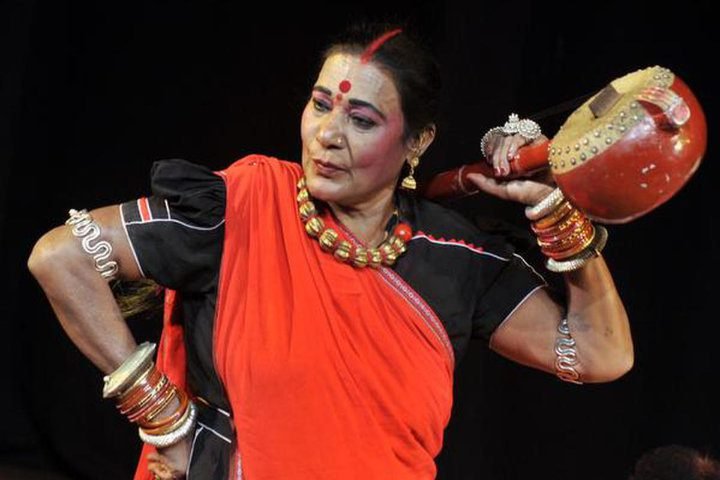
Storytelling has always been closely connected with theatre in India. Pandavani exponent Teejan Bai, the Padma Vibhushan-honored storyteller pictured above, died on 5 July 2026 after a long illness, leaving behind a body of performance that carried the oral tradition this section describes into the present day.
This focus on storytelling allowed Indian theatre to incorporate literature and the fine arts into live performances. As a result, theatre developed into a truly multidisciplinary artistic experience.
Theatre has also been an important medium of communication in India. It can inform, entertain, persuade, and bring people together. Because it can communicate with people in several ways, theatre is especially valuable for addressing social issues and sharing messages with diverse audiences.
The communication model of theatre includes several key components:
- Sender: The artists, writers, directors, and performers who create the message and bring it to life on stage
- Message: The stories, themes, and social commentary presented through the production, particularly those connected with the interests and concerns of the intended audience
- Channel: The theatrical performance through which the message is communicated, including dialogue, staging, lighting, and sound
- Receiver: The audience, whose members come from different backgrounds and interpret the performance through their own experiences and perspectives
- Feedback: The audience’s immediate response through reactions, applause, or discussions after the performance
This feedback helps artists understand the effect of their work and improve their approach. Through this communication process, theatre can begin conversations, challenge social norms, and encourage people to support positive change.
Its ability to connect with audiences emotionally and intellectually makes theatre a powerful force in shaping public discussion and promoting social change.
The Growth of Theatre in India
There are many different traditions that have influenced and inspired the development of modern Indian theatre.
The three main influences are:
- Sanskrit or classical theatre
- Folk theatre
- Western theatre
Sanskrit or Classical Theatre
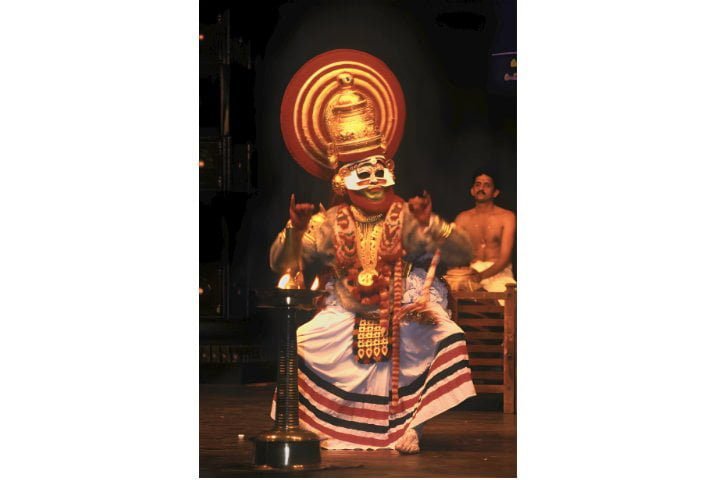
The earliest known form of theatre in India was Sanskrit or classical theatre. It was known for its highly refined performance techniques.
Koodiyattam originated in Kerala and is considered the world’s oldest classical theatre form. This sophisticated theatrical tradition followed the principles described in the Natya Shastra.
Classical theatre was mainly urban in character and catered to the refined tastes of elite audiences.
Folk Theatre
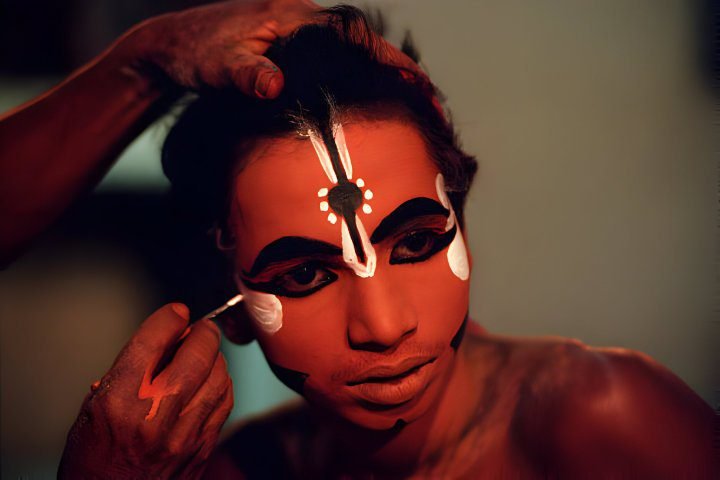
Alongside classical theatre, a vibrant folk theatre tradition developed from the oral traditions of rural India. Deeply connected with the cultural and social life of villages and communities, folk theatre continues to thrive in almost every region of the country.
Unlike the highly stylized form of classical theatre, folk theatre grew from rural traditions. Its simple form and natural style created an immediate and authentic connection with rural life.
Types of Theatre in India
Indian folk theatre can be broadly categorized into two main streams:
- Religious theatre
- Secular theatre
Religious Theatre
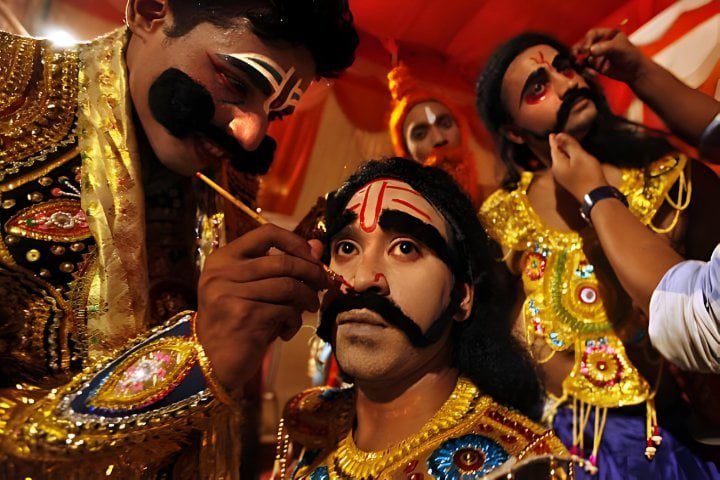
Religious or ritual theatre forms, such as Ramlila, Rasleela, and Bhand Nautanki, mainly tell stories through singing and recitation.
These performances often present mythological stories and recreate sacred rituals. In doing so, they help preserve and communicate cultural and religious traditions.
The staging, costumes, makeup, and acting styles may differ between these theatre forms. However, they all share a respect for the divine and a commitment to preserving local customs.
Secular Theatre
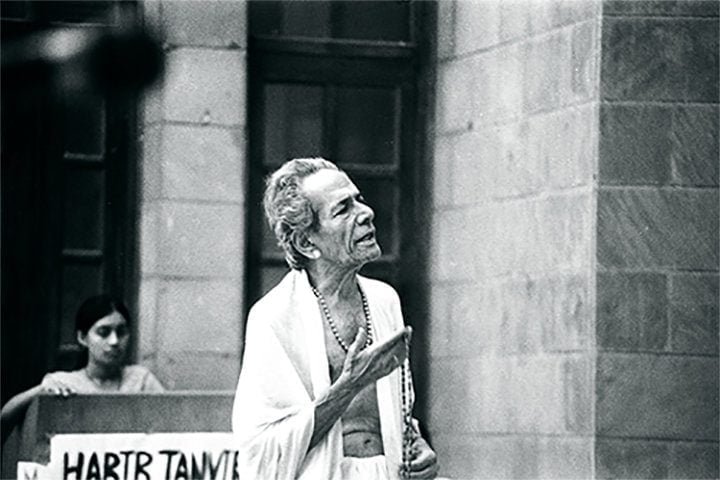
Secular theatre, also known as the “theatre of entertainment,” explores subjects such as romance, love, courage, and social and cultural traditions.
Its main purpose is to entertain the public and give people a break from their daily routines. It also celebrates the experiences of human life.
Examples include Nautanki or Swang from North India, Tamasha from Maharashtra, and Jatra from East India.
The Evolution and Influence
As India modernized, its theatrical traditions also changed. Theatre adapted to a new social and cultural environment while preserving its essential character.
Western literature and theatre introduced new ideas and approaches. At the same time, the growing sense of nationalism and pride in India’s history brought new stories and perspectives to the stage.
The institutions that supported this modernization, along with the ownership models behind them, are discussed in our guide to the history of Indian theatre.
Contemporary Indian theatre has also seen the rise of visionary directors and playwrights who have expanded the possibilities of theatrical expression.
Figures such as B.V. Karanth, Habib Tanvir, Bansi Kaul, Rattan Thiyyam, and Feroz Khan have made a lasting impact on national and international theatre. Their innovative methods and experimental styles have helped redefine Indian theatre.
Conclusion
Indian theatre continues to be a vibrant reflection of the country’s diverse cultural landscape. From its ancient roots in ritual and storytelling to its contemporary exploration of social and political themes, Indian theatre has consistently reflected the hopes, struggles, and aspirations of its people.

This blog brilliantly highlights Indian theatre’s rich cultural diversity and artistic depth. It’s a fascinating read that showcases the vibrancy and complexity of India’s theatrical traditions. Highly recommended for culture enthusiasts!