

Few institutions shape what Indian audiences see on screen as decisively as the Central Board of Film Certification (CBFC), the statutory body responsible for approving films for public exhibition.
Though technically a certifying authority rather than a censor, the CBFC’s decisions carry such cultural weight that even streaming platforms—which are under no legal obligation to mirror theatrical cuts—routinely adopt its edits.
This quiet, near-total compliance means the CBFC’s judgments do more than trim individual films; they signal to producers, financiers, and writers which stories are commercially and politically safe to tell in the first place.
This is why few political films championing secularism, or critiquing communalism, reach Indian cinemas today. It is also why filmmakers hesitate to attempt something like Satluj, a film that endured a difficult passage through the certification process and struggled even after a brief online release.
Beyond its power to shape content, the CBFC operates under a single legal check—the Cinematograph Act, 1952, and its accompanying rules—but its supposed autonomy exists largely on paper. Recent cases reveal a pattern of indefinite delays functioning as de facto bans, alongside outright violations of transparency requirements written into the law itself.
Understanding how the CBFC exercises this influence, and where it has overstepped its legal mandate, is essential for anyone examining the intersection of media regulation, free expression, and governance in India.
The CBFC’s Cultural Authority

The Central Board of Film Certification was established under the Cinematograph Act, 1952, with a mandate to classify films rather than outright ban them—categorizing content as U (Universal), U/A (parental guidance), A (Adult), or S (special/restricted audiences).
In practice, however, the board’s power to demand cuts as a precondition for certification functions as a form of pre-censorship, since a film cannot be legally exhibited in Indian cinemas without CBFC approval.
What makes this authority especially consequential is its reach beyond the theatrical circuit. Streaming services are governed separately under the Information Technology Rules, 2021, which set up a self-regulation and grievance redressal framework rather than mandatory pre-certification.
Yet despite having no legal compulsion to do so, these platforms overwhelmingly choose to release the CBFC-approved, cut version of a film rather than the filmmaker’s original vision. This voluntary compliance extends the CBFC’s influence far beyond its statutory jurisdiction.
The deeper consequence is anticipatory self-censorship. Producers and writers, aware of the patterns in what the CBFC has historically cut or delayed, avoid greenlighting certain kinds of stories altogether.
This explains the scarcity of contemporary Indian films that explicitly engage with secularism or critique communal politics—not because such stories are legally banned outright, but because the certification process has created a chilling effect that shapes decisions long before a camera rolls.
Case Studies: Satluj, Monkey Man, and Homebound
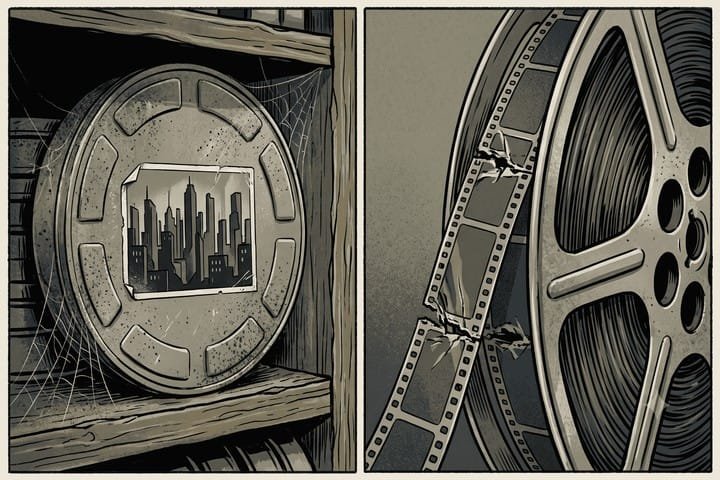
Three recent examples illustrate how the CBFC’s decisions—or its refusal to decide—function as tools of control:
1. Satluj: This film faced a difficult passage through the censor’s process and was ultimately met with an unfavorable fate even after achieving a brief online release, discouraging similar politically themed projects from being attempted.
2. Monkey Man: This film, which presents a dystopian vision of a society with supremacy embedded in its structure, has not even been watched by the CBFC for over a year. The board has neither approved nor rejected it—it has simply avoided taking a call.
This amounts to a de facto ban without the accountability that an official rejection would invite, since an outright ban would generate headlines and possible legal challenge, whereas indefinite silence achieves the same suppression quietly.
3. Homebound: It is widely reported that even background references to the government’s inaction during the COVID-19 pandemic were removed from this film—despite it being India’s official entry to the Oscars.
Taken together, these cases demonstrate a pattern: the CBFC is being used not merely to classify content by age-appropriateness, but to purge Indian cinema of politics hostile to the dominant philosophy, according to the article’s analysis. The board’s statutory deadline to review films within a matter of weeks is treated as optional when a film’s content is politically inconvenient.
The CBFC’s Transparency Violations

Beyond delayed rulings and politically motivated cuts, the CBFC has been engaging in what amounts to unlawful concealment of its own decisions, in direct defiance of statutory transparency requirements:
Gazette Publication Halted: Section 5A(2) of the Cinematograph Act, 1952, requires the CBFC to publish certificates in the government Gazette. The board has stopped doing this entirely, removing a long-standing public record of what has been certified and how.
Online Records Obscured: Details of certificates issued with cuts—which were already unindexed and difficult to obtain—have now been placed behind an “under maintenance” message online, further restricting public access to information that is legally required to be disclosed.
Archives Cut Off: Archives that previously received cut portions of films for researchers to study have stopped receiving this material altogether, closing off a vital resource for historians, academics, and media scholars studying the evolution of Indian censorship.
This combination of practices means that citizens, researchers, and even the film fraternity itself have no reliable way to track what has been excised from Indian cinema, why, or how consistently the board applies its own standards.
The concealment is not a matter of bureaucratic inefficiency—it is a direct violation of a specific statutory obligation under Section 5A(2), and it removes the very paper trail that would otherwise allow the CBFC’s decisions to be scrutinized or challenged.
Free Expression and the Limits of Statutory Autonomy

The core argument here is that pre-censorship as a concept is fundamentally at odds with a free society, and the CBFC’s role ought to be curtailed, if not abolished altogether.
Until that structural change occurs, however, there remains a narrower but urgent demand: the CBFC must be compelled—by the film fraternity and by its own founding statute—to simply follow the law as it stands.
This is a modest ask on its face. It does not require dismantling the certification system or rewriting the Cinematograph Act, 1952. It requires only that the board:
1. Publish certificates in the Gazette as Section 5A(2) mandates.
2. Restore public, indexed access to details of cuts made to certified films.
3. Resume supplying cut portions to archives for researcher access.
4. Adhere to its own statutory timelines for reviewing films, rather than allowing indefinite delays to function as unofficial bans.
The pattern across Satluj, Monkey Man, and Homebound shows that the danger is not confined to overt bans, which are visible and can be legally challenged. The more subtle threat lies in silence, delay, and the quiet disappearance of records. It is a mechanism that achieves suppression while avoiding the accountability that a formal rejection would invite.