This article contains affiliate links. As an Amazon Associate, Indian Media Studies earns from qualifying purchases at no extra cost to you.
Types of Puppetry in India: An Ancient Performing Art
Puppet theater, as a form of entertainment, is found in practically all parts of the world.
In puppet theater, figures known as puppets illustrate the narrative. A puppeteer provides movement and voice, and the audience follows the story through the puppet rather than a live actor.
India’s puppetry tradition is old enough to appear in classical sources. The Natyashastra, the foundational Sanskrit text on dramatic theory, contains references to puppet-like figures, and Tamil Sangam literature also mentions puppetry. The tradition has continued, largely unbroken, in the regional folk theaters that are still performed across the country today.
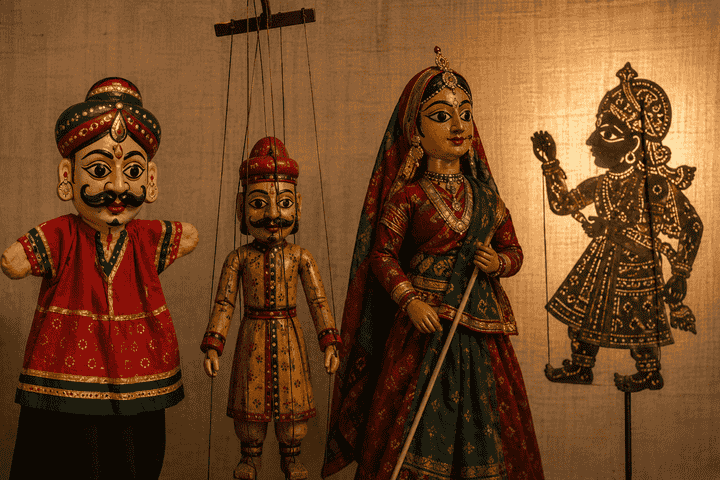
India recognizes four basic kinds of puppets, each with its own regional strongholds, materials, and performance conventions.
- Glove puppets
- String puppets
- Rod puppets
- Shadow puppets
Glove Puppets
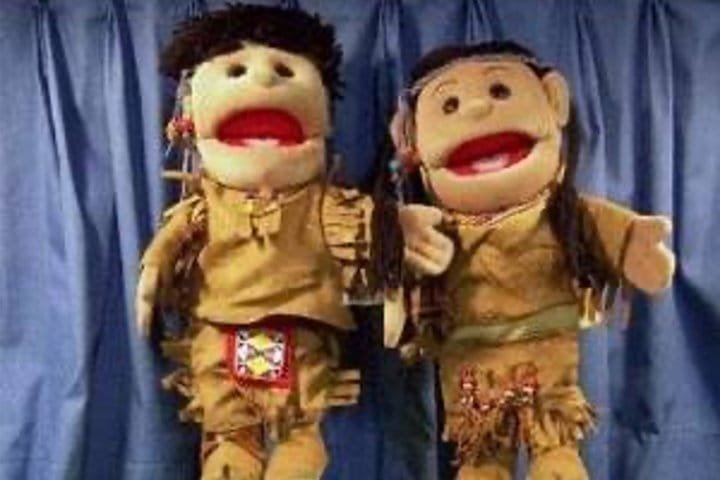
Glove puppets are worn on the hand, and the puppeteer manipulates the head and arms with the fingers. The puppeteer narrates the story in verse or prose, while the puppet supplies the visual half of the performance.
Glove puppetry is mainly associated with Kerala, Odisha, and West Bengal, with additional traditions in Karnataka and Uttar Pradesh.
Kerala’s form is called Pavakathakali or Pavakoothu. It borrows its makeup and costume directly from Kathakali dance-drama and usually performs episodes from the Ramayana or stories of Radha and Krishna.
Odisha’s glove tradition performs under the name Kundhei Nacha, and West Bengal’s is known as Bener Putul, practiced traditionally by the Kahar community. In Lucknow, a related glove-puppet show centered on the comic married couple Gulabo and Sitabo remains popular locally.
String Puppets
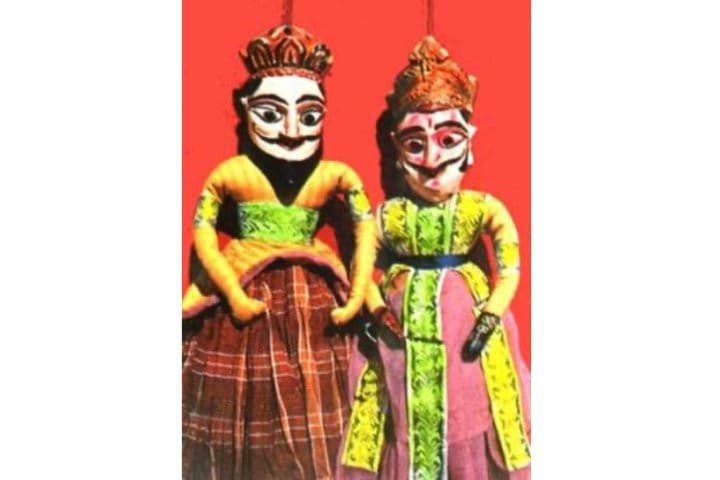
String puppets, or marionettes, are found in Rajasthan, Odisha, Karnataka, Tamil Nadu, and Andhra Pradesh. In this form, the emphasis falls more on the puppeteer’s manipulative skill than on the puppet’s own construction.
The Kathputli shows of Rajasthan are the most widely recognized string puppet tradition in the country. Each puppet is carved from a single piece of wood and controlled by strings running to a crown-like band worn by the puppeteer.
In Tamil Nadu, the tradition is called Bommalattam, and it is actually a mixture of string and rod techniques, historically patronized by the Thanjavur court.
Rod Puppets
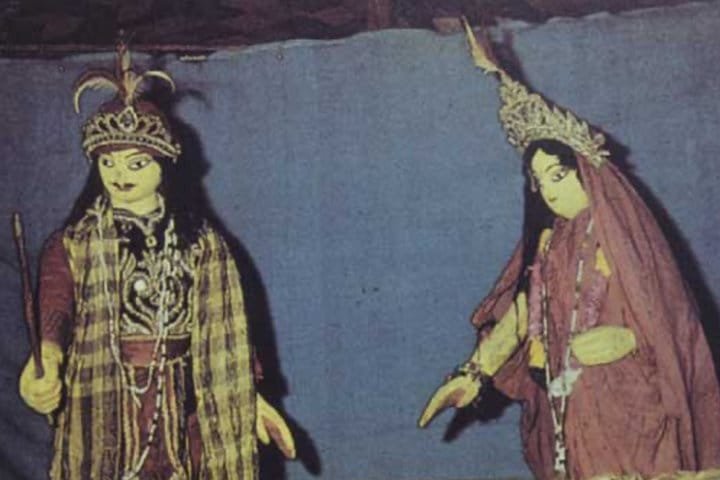
Rod puppets are larger than glove puppets and are supported and moved using rods attached to the body from below. This form is now found mainly in West Bengal, Odisha, and Bihar.
The Putul Nach of West Bengal stands three to four feet tall and performs stories drawn from the Jatra folk theater tradition. It has three joints, at the neck and at each shoulder, and a small musical accompaniment of harmonium, cymbals, and tabla.
Odisha’s Kathi Kundhei is considerably smaller, typically 12 to 18 inches, and draws its stories from the Ramayana, the Puranas, and social themes. Bihar’s Yampuri puppets are simpler still, carved from a single piece of wood with no joints at all.
Shadow Puppets
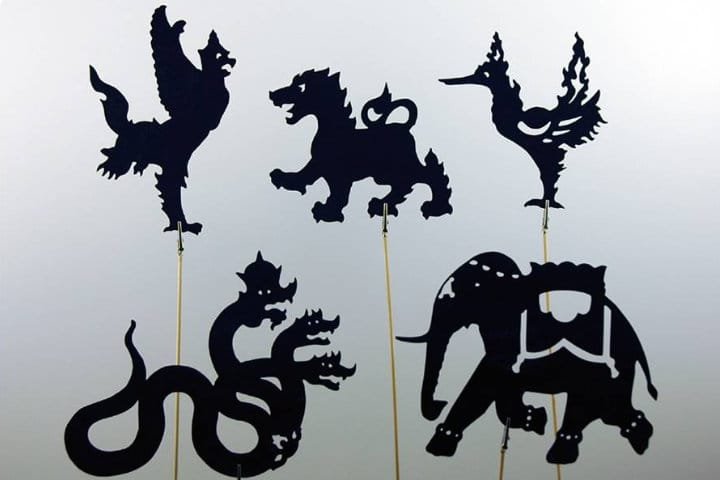
India has a long and rich tradition of shadow theater. Shadow theater is a unique performing art in which the audience sees only the shadows cast on a screen, not the puppet figures themselves.
A light source sits behind a screen, and the manipulator presses flat, treated leather figures against it, forming a sharp, colored silhouette for the audience seated in front.
Andhra Pradesh’s Tholu Bommalata is the best-known of these traditions, using large, colorful leather figures to narrate the Ramayana and the Mahabharata. Karnataka’s version is Togalu Gombeyatta, where puppet size varies with a character’s importance in the story.
Odisha’s Ravana Chhaya uses simpler, jointless figures. Kerala and Tamil Nadu share a tradition called Tholpavakoothu, which is traditionally performed inside temple precincts during festivals.
A full survey of Indian puppetry organized around the same four techniques this article covers. It adds regional detail, craft and construction notes, and appendices listing puppet museums and practicing puppeteers across the country.
Paid link. As an Amazon Associate, Indian Media Studies earns from qualifying purchases. This costs you nothing extra and does not affect what we recommend.
Conclusion
India’s four puppet traditions did not develop in isolation from each other or from the country’s other performing arts. Kerala’s glove puppetry borrows Kathakali’s makeup, Tamil Nadu’s Bommalattam blends two techniques into one, and shadow puppetry across four states draws on the same Ramayana and Mahabharata material that anchors Indian classical dance and theater.
Many of these regional forms now survive in a small number of practicing families and face real pressure from television and digital entertainment. Institutions such as the Sangeet Natak Akademi and puppetry festivals, including Delhi’s Ishara International Puppet Theatre Festival, remain among the few active efforts to keep these traditions performed rather than only documented.
References
- Ghosh, S., and Banerjee, U. K. Indian Puppets. Ahmedabad: Mapin Publishing.
- “Kathputli (puppetry).” Wikipedia, The Free Encyclopedia.
- “Tholpavakoothu.” Wikipedia, The Free Encyclopedia.
- “Tholu Bommalata.” Wikipedia, The Free Encyclopedia.