
For decades, a film star’s box office numbers decided how much a brand would pay for an endorsement. That equation has quietly broken down. Advertisers today care less about a star’s last hit and more about how clean, consistent, and controversy-free their social media presence looks.
A new brand valuation study of India’s top 25 celebrities, conducted by financial and risk advisory firm Kroll, captures this shift clearly. Shah Rukh Khan has not had a film release in the past three years. Yet he remains India’s most valuable celebrity by brand valuation.
He endorsed between 30 and 35 brands in 2025, up from 25-30 the previous year, and has held his endorsement fee steady at Rs 10 crore per brand across 2024 and 2025. This is not an isolated case. It reflects a broader change in how Indian advertisers select the faces of their campaigns.
Digital endorsement deals now make up 60-75% of all endorsement deals, up from 40-60% just two to three years ago. That shift has forced brands to develop new metrics for evaluating star power, ones rooted in online sentiment, content authenticity, and cross-generational appeal rather than weekend box office collections.
This matters for anyone studying media, marketing, or mass communication in India today. It signals how digital platforms have restructured the economics of celebrity culture, turning social media reputation into a tradeable financial asset.
The following sections unpack what is driving this change, who is benefiting from it, and what the four biggest trends in celebrity brand valuation reveal about the future of Indian advertising.
Key Highlights
Kroll ranks Shah Rukh Khan first in 2025 at ₹1,694 crore (USD 177.9 million), ahead of Ranveer Singh, Virat Kohli, and Sachin Tendulkar; Alia Bhatt and Deepika Padukone lead among women at sixth and seventh overall.
Digital endorsement deals now form 60-75% of total endorsement deals, up from 40-60% two to three years ago, per Kroll.
Net positive sentiment, original content creation, long-term legacy, and cross-generational emotional appeal are the four key metrics advertisers now track.
Virat Kohli, Sachin Tendulkar, and MS Dhoni lead among sportspersons.
Nearly half of India’s top 25 most valuable celebrities are now women, while Southern stars like Rashmika Mandanna and Samantha Ruth Prabhu are gaining pan-India appeal.
Why Box Office Success No Longer Decides Endorsement Value
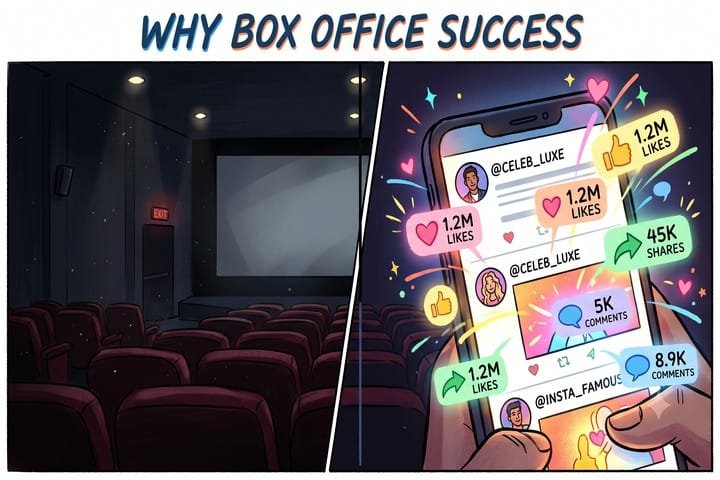
Advertisers once treated a star’s latest release as the clearest signal of their commercial pull. That logic has weakened considerably. Umakanta Panigrahi, managing director of Valuation Advisory Services at Kroll, explains the shift directly. “Today, box office success is not a key criterion in endorsement deals.
Brands focus on the digital presence of stars. This has made social media engagement an important factor in selecting celebrities for endorsement deals,” he said. Shah Rukh Khan is the clearest example of this new reality. Despite no film release in three years, he tops Kroll’s brand valuation study of India’s top 25 celebrities.
His endorsement count rose to 30-35 brands in 2025 from 25-30 in the previous year. His fee per brand has held firm at Rs 10 crore across 2024 and 2025, a sign that advertisers still see strong value in his brand equity and digital footprint.
This pattern connects to a larger structural change in how endorsement deals are built. According to Kroll, digital endorsement deals now account for 60-75% of total endorsement deals, up sharply from 40-60% over the past two to three years.
As campaigns move from television and print toward Instagram, YouTube, and short-video platforms, a celebrity’s online behavior has become the primary asset advertisers are buying.
The New Metrics: Sentiment, Authenticity, and Legacy

With box office numbers losing relevance, brand valuation experts have identified specific digital parameters advertisers now track closely. These metrics focus less on popularity and more on trust, consistency, and reputational safety.
Net positive sentiment: Ajimon Francis, managing director of brand valuation consultancy Brand Finance, says this is one of the most closely watched indicators. “Advertisers look beyond box office success, with digital influence becoming a key consideration. They closely track the net positive sentiment around a film star,” he said.
He points to how quickly reputational damage can spread online. “Today, negative sentiment spreads rapidly online. As a result, stars with a positive or neutral public image continue to attract advertisers regardless of how many films they have released,” Francis added.
Original content creation: Advertisers also reward stars who actively shape their own online presence rather than passively appearing in it. “Advertisers prefer celebrities who create original content, post regularly, and stand for meaningful causes instead of simply reposting others’ content. These qualities build trust and strengthen engagement,” Francis said.
Long-term legacy over short-term buzz: Navin Shah, joint managing director of branded entertainment company EMC Solutions Worldwide, argues that reputation outlasts any single project. “Long-term legacy matters a great deal.
Advertisers prefer stars who stay away from controversy and have a strong future film pipeline. Ultimately, endorsements are driven by reputation, relevance and brand fit, not just box office numbers,” he said.
Cross-generational emotional connect: Anirudh Sridharan, cofounder of influencer marketing company HashFame, points to a deeper emotional driver behind enduring star value. “Advertisers select personalities with unmatched mass appeal who can connect with audiences across generations,” he said.
“Stars fulfil these criteria. They represent memories, emotions and nostalgia, reminding people of different phases of their lives. These qualities help them continue to attract endorsements even after their peak years.”
Together, these four parameters explain why a star’s film calendar has become secondary to their online conduct in boardroom conversations about endorsement contracts.
Who Else Is Rising: The 2025 Brand Valuation Rankings
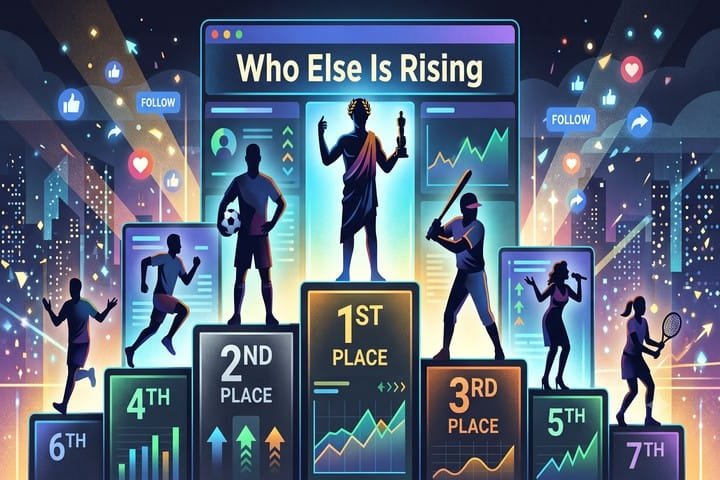
Kroll’s official ranking places Shah Rukh Khan at the top with a brand value of ₹1,694 crore (USD 177.9 million) in 2025. Ranveer Singh holds the second position at ₹1,551 crore (USD 162.9 million). Virat Kohli ranks third at ₹1,508 crore (USD 158.4 million), followed by Sachin Tendulkar at ₹1,199 crore (USD 125.9 million) and MS Dhoni at ₹1,098 crore (USD 115.3 million) in fifth place.
Alia Bhatt leads the female celebrities on the list, with a brand value of ₹894 crore (USD 93.9 million), placing her sixth overall. Deepika Padukone follows at ₹849 crore (USD 89.2 million), ranking seventh. Their positions confirm Panigrahi’s point that women are closing the gap in brand valuation, even though the top five overall spots still belong to Khan, Singh, Kohli, Tendulkar, and Dhoni.
This ranking pattern shows that film and sports stars now compete on the same scale. Kohli holds the third spot outright, not a separate “sportsperson” category. A cricketer’s on-field form matters less than his long-term public image, much like a film star’s box office record now matters less than online reputation.
The consistency of names like Kohli, Tendulkar, and Dhoni near the top of the combined list shows that trust built over years of public visibility carries real financial weight in endorsement negotiations. Kroll values the combined brand worth of India’s top 25 celebrities at ₹19,040 crore (USD 2 billion) in 2025, down 3.7% from the previous year.
Four Trends Reshaping Celebrity Brand Value in India
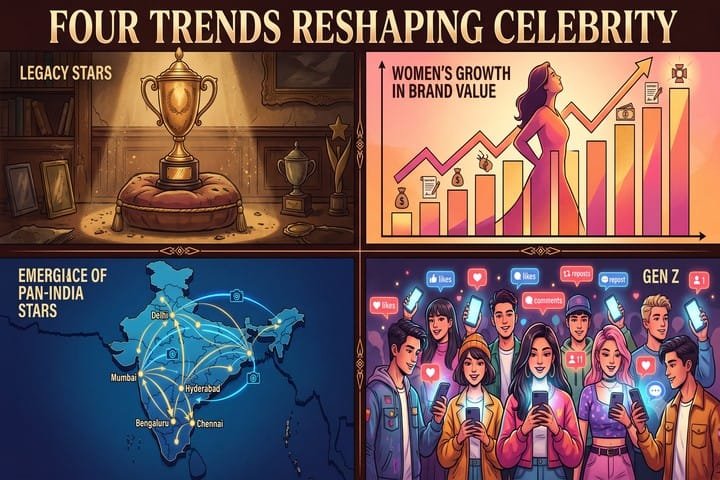
Panigrahi identifies four distinct trends emerging from Kroll’s 2025 study, each pointing to a broader transformation in how Indian audiences and advertisers value celebrity.
Legacy icons hold their premium
“Legacy icons such as Shahrukh Khan, Sachin Tendulkar and M S Dhoni continue to command a premium because they enjoy trust, familiarity and recognition across generations,” Panigrahi said. “Their appeal goes well beyond their current professional achievements. They are valuable brands even years after their peak.”
Female celebrities are closing the gap fast
“Female celebrities are growing much faster than their male counterparts in brand valuation,” he said. “Nearly half of the top 25 most valuable celebrities are now women. Women stars are increasing both their endorsement portfolios and brand value.”
Southern stars are becoming national brands
“Celebrities such as Rashmika Mandanna and Samantha Ruth Prabhu have significantly improved their rankings because of their growing pan-India appeal,” Panigrahi noted.
Younger Bollywood stars are building fast with Gen Z audiences
“Younger Bollywood stars are also rapidly building their endorsement businesses through strong engagement with Gen Z audiences,” he said. “Ananya Panday and Janhvi Kapoor have recorded notable growth in brand value.”
These four trends reinforce a single underlying point. Box office success alone no longer determines a celebrity’s brand value in India’s advertising market.
What This Means for Indian Advertising and Media Studies

The Kroll study signals a structural change relevant to marketers, media planners, and communication students alike. Long-term relevance, cross-generational appeal, and meaningful digital engagement are becoming equally important as, if not more important than, traditional markers of commercial success like box office collections or match performance.
This shift also raises the stakes for celebrities managing their personal brand. A single controversy can now erase years of built-up trust faster than any box office flop ever could, given how quickly negative sentiment spreads online.
For advertisers, this means due diligence now extends well beyond a star’s filmography or career record into their digital conduct, past statements, and audience sentiment trends.
For students of media and business, this case illustrates how digital platforms have converted celebrity reputation into a measurable financial asset, tracked, valued, and negotiated much like any other brand property.