Media Ownership in India: Introduction
Whenever a new format emerges, every media company encounters a similar choice—should they develop the skills in-house, acquire an existing company with that expertise, or team up with someone who already has it?
While the decision might seem technical, it’s really about who owns the future. The decision made today will influence who controls Indian media in the years to come.
Between 2023 and 2026, three Indian media companies—both listed and private—responded in the same way: they made acquisitions. Saregama acquired Pocket Aces through four separate transactions. Zee Entertainment invested in a microdrama platform and a visual effects studio. Yash Raj Films, traditionally centered on theatrical films, invested in a digital-first company producing vertical content for new audiences.
Looking into media ownership in India involves paying close attention to transactions like these, rather than just focusing on the programs themselves. Ownership patterns in media play a key role in determining what gets produced, who earns royalties from intellectual property, and which perspectives reach large audiences.
It’s also one of the most accessible areas of media studies because ownership details are recorded in regulatory filings, making them easier to examine than subjective interpretations.
This article shares insights into how ownership transitions happen within the Indian media industry. You’ll learn why digital-native companies have become popular targets, explore how staged acquisitions work, and understand the strategic reasons for choosing to buy instead of build. Plus, it highlights how global platforms approach these challenges in their own unique ways.
The transactions listed below come directly from company disclosures and trade reports, with all figures presented as they were originally filed.
Why Digital-Native Companies Became Acquisition Targets

Media ownership shifts with audience attention. As audiences migrate to mobile screens, companies that built audiences on these devices gained value, especially for those that had not previously established a presence there.
Two asset classes contributed to this. The first is intellectual property designed for digital consumption. Pocket Aces possesses a catalog of over 35,000 content pieces across brands like FilterCopy, Nutshell, and Gobble, with more than 15 new pieces released each day.
The second is establishing a direct relationship with the audience. When Saregama first invested, Pocket Aces had more than 95 million followers, and its talent division, Clout, manages more than 215 digital creators.
Replicating either asset is not immediate. Building a catalog requires years, and cultivating an audience takes even longer. Moreover, the platform owns the distribution, so the audience cannot be purchased from it.
The financial profile made these companies acquirable rather than just attractive. Pocket Aces reportedly generated Rs 104 crore in revenue from operations in FY23, with a 34 percent compound annual growth rate over the past four years. That is substantial enough to matter to an acquirer and small enough for a mid-sized listed company to absorb.
Rusk Media presents a similar profile in a newer segment. It operates the Alright! TV platform, producing vertical content for Gen Z and Gen Alpha audiences, and raised Rs 100 crore in a pre-Series C round led by Nazara Technologies, with participation from Info Edge Ventures, IvyCap Ventures and a consortium led by Audacity VC.
Venture funding at that scale signals proven traction and a valuation benchmark, making a strategic buyer’s decision easier. Microdrama, the vertical serialized format these companies work in, is covered separately on this site.
The key aspect for ownership analysis is more specific. The format has established a group of companies that hold audience relationships, something that legacy studios couldn’t develop as quickly on their own.
How Media Ownership Changes Hands?
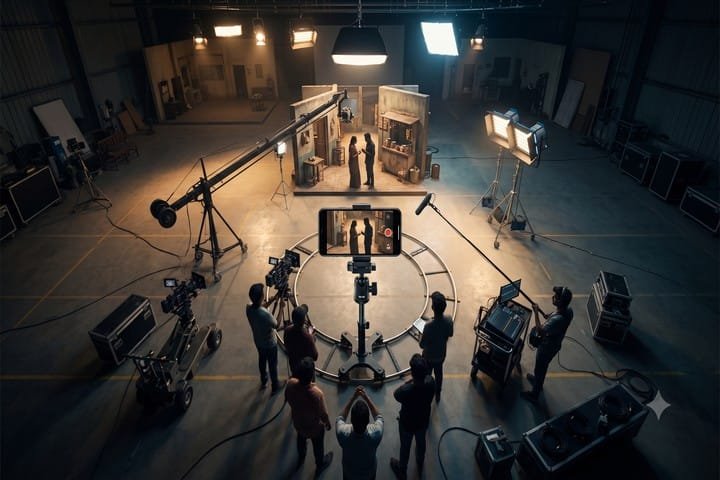
Ownership usually isn’t transferred in just one go. Instead, acquirers often make purchases in stages, which helps to minimize risk and makes later payments depend on performance. A good example of this is Saregama’s acquisition of Pocket Aces—their approach is well-documented in India and can serve as a valuable template.
The first tranche closed in September 2023. Saregama acquired 51.82 percent for approximately Rs 174 crore in an all-cash deal, taking control while leaving the founders substantially invested.
The agreement included an option to acquire a further 41 percent within fifteen months at pre-agreed multiples, thereby fixing the price formula in advance and removing the need to renegotiate.
The second step came in November 2024. Saregama subscribed to a rights issue for over Rs 15 crore, raising its holding to 53.51 percent. A rights issue puts capital into the company rather than into the hands of selling shareholders, so it was funding growth rather than buying out owners.
The third step, completed on 29 March 2025, was the substantial one. Saregama paid Rs 127.47 crore for 2,70,427 securities, including equity shares and several series of compulsorily convertible preference shares, thereby taking its holding to 90.37 percent.
A fourth tranche closed on 22 July 2026, when Saregama paid Rs 20.05 crore for 35,635 equity shares, thereby reaching 95.76 percent.
Compulsorily convertible preference shares are a common instrument in Indian venture deals, converting to equity on agreed terms while giving investors preference in a liquidation.
And because a director of Pocket Aces was among the selling shareholders and Pocket Aces is a material subsidiary of Saregama, part of the transaction was classified as a related party transaction conducted at arm’s length.
Listed companies must disclose these separately, which is why this level of detail is publicly available. Not every acquirer discloses.
Yash Raj Films made a strategic investment in Rusk Media without disclosing financial terms, which it can do because YRF is privately held.
Zee Entertainment invested Rs 100 crore in the microdrama platform Bullet and committed up to Rs 116 crore to Phantom Digital Effects, a visual effects firm. The word “up to” signals a milestone-linked commitment rather than a paid sum.
The pattern is consistent. Take control early, pay the remainder over time, and tie later payments to the company’s continued performance.
The Strategic Logic: Buying IP Rather Than Building It
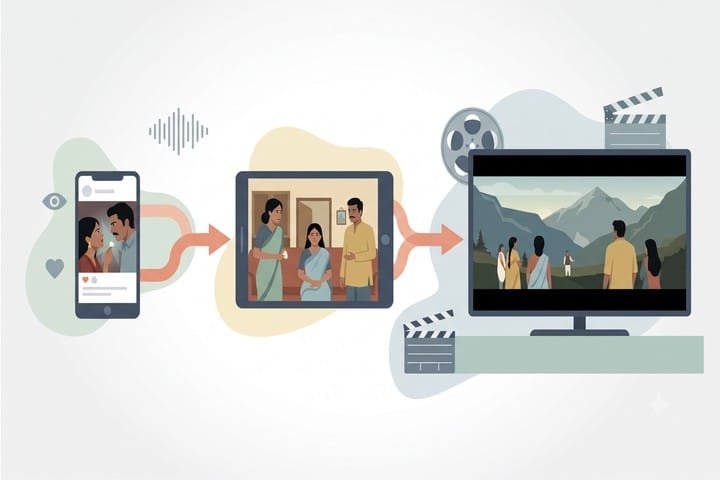
The decision to build or buy depends on timing and tacit knowledge. While capital can quickly fund a new division, it cannot replicate the accumulated judgment of what appeals to a Gen Z audience, which resides within teams rather than in written documents.
Saregama’s reasoning was explicit about the synergy it wanted. Acquiring Pocket Aces brought a new dimension of intellectual property and a distribution network of over 95 million followers, which Saregama intended to use to promote its music catalog among audiences aged 18 to 35.
A music company with a deep library and an aging listener base bought its way into a younger audience rather than trying to attract one.
Yash Raj Films took a different position on the same question. Akshaye Widhani, the studio’s chief executive, summarised the philosophy in one line;
“Platforms are infrastructure, content and IP are culture”
The partnership with Rusk Media assigns YRF creative direction over original animation and vertical microdrama intellectual property, while Rusk produces and distributes through Alright! TV and its global digital channels.
Notably, the collaboration focuses on creating original IP rather than adapting YRF’s existing film franchises. Widhani said vertical storytelling has its own grammar and its own audience expectations, and that getting that right with original content was the priority.
That is a significant choice for a studio holding the YRF spy universe, a seven-film franchise including Pathaan, War and the Tiger films. The obvious move would have been to extend those properties into short form. YRF declined it.
Mayank Yadav, co-founder and chief executive of Rusk Media, framed what the partnership is meant to solve. Vertical entertainment in India, he said, had produced extraordinary reach but not the enduring intellectual property that defines a category.
Reach without ownership is the recurring problem for digital-native companies. They accumulate audiences on platforms they do not control, and those audiences cannot be sold, only rented.
Separately from the Rusk investment, media reports indicate YRF is expected to spend around Rs 150 crore over the coming years on microdrama content and a direct-to-consumer platform, led by Widhani, with Saugata Mukherjee appointed to oversee creative development across streaming, films and microdramas.
That figure comes from industry sources rather than a company announcement, and should be treated as reported rather than confirmed. It would represent a build strategy running alongside the buy strategy, which is not unusual for a studio hedging across an uncertain format.
Licensing Versus Owning: How Global Platforms Operate
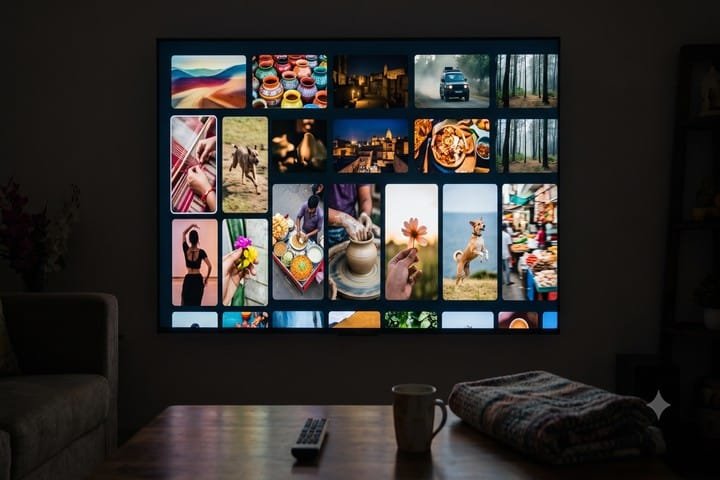
There is a third option beyond building and buying. License the content and own nothing. Netflix chose it. In July 2026, the company signed content licensing agreements with six digital publishers: Penske Media, BuzzFeed Studios, Condé Nast, Hearst Magazines, People Inc. and Tastemade.
The content began rolling out on 3 August 2026 for subscribers in the United States, Canada, the United Kingdom, Ireland, Australia, and New Zealand, with episodes ranging from about 2 minutes to over 20 minutes.
Titles come from established brands including Vanity Fair, Vogue, Rolling Stone, Bon Appétit, Variety, and The Hollywood Reporter. Financial terms were not disclosed. The difference from the Indian transactions is very clear.
Netflix acquired no equity, no catalog and no team. It rented access to series that, in most cases, already ran on YouTube for a period, on terms neither side has published.
The trade-off is straightforward. Licensing is fast, reversible, and cheaper than acquisition. It also builds nothing durable. When the agreement lapses, the publisher retains the audience, the brand, and the catalog and can license the same content elsewhere.
Saregama, having bought Pocket Aces outright, owns those assets permanently. Competitive pressure explains why Netflix moved at all.
YouTube commands 13.4 percent of all United States television viewing minutes, compared with Netflix’s 7.8 percent, a gap that has widened steadily.
Netflix advertising revenue is on track to reach 3 billion dollars in 2026, double the 1.5 billion in 2025, with Omdia projecting 8 billion by 2030. The company is now working with more than 4,000 advertisers, up 70 percent year on year.
An advertising business thrives on high volume and regular visits, and short content can deliver this more affordably than commissioned dramas. Licensing helps acquire the right inventory, while acquisition focuses on building capability. When a company believes a format will be important for the next decade, it chooses to acquire it.
A company is protecting itself by licensing strategies to counter a competitor’s engagement benefits. Netflix is taking measures to hedge, while Saregama, Zee, and Yash Raj Films are also making commitments to secure their positions.
Conclusion
Ownership analysis might seem less exciting than program analysis, but it’s actually more insightful. It reveals things that press releases tend to overlook.
Three patterns emerge from the Indian transactions of 2023 to 2026.
- Legacy media companies with capital and aging audiences bought digital-native companies with audiences but no capital, a straightforward trade.
- Control transferred in stages rather than at once, with option structures that fixed prices in advance and later tranches serving as performance payments.
- Acquirers bought capability rather than content, since the catalog was replicable in principle while the teams and audience relationships were not.
It’s important to also focus on the regulatory aspect, not just the commercial side. When media ownership is concentrated, it can bring up concerns about editorial independence and the diversity of viewpoints. While Indian policies have touched on these issues, there’s still more to explore and ensure a truly open and varied media landscape.
Cross-media ownership rules remain a live subject of debate, and a market where a handful of groups own production, distribution and talent management is structurally different from one with many independent participants.
For anyone studying Indian media, the practical skill is reading a disclosure. The combination of stake percentage, consideration paid, instrument type, tranche structure, and related-party classification together tells you more about where an industry is heading than any executive interview will.
References
- Storyboard18 — Saregama acquires majority stake in Pocket Aces for Rs 127.47 crore
- Variety — India’s Yash Raj Films backs Rusk Media in vertical entertainment push
- Exchange4media — Yash Raj Films eyes microdramas with Rs 150 crore initiative (reported)
- TechCrunch — Netflix adds shorter video content through publisher licensing deals
- TechCrunch — Indian music label Saregama acquires Pocket Aces
Key Highlights
- Media ownership in India changed hands through staged acquisition between 2023 and 2026. Saregama moved from 51.82 percent of Pocket Aces for about Rs 174 crore in September 2023, through a rights issue and a Rs 127.47 crore tranche in March 2025, to 95.76 percent after paying Rs 20.05 crore in July 2026.
- Legacy companies bought capability rather than content. Pocket Aces brought a catalog of over 35,000 pieces, more than 95 million followers and a talent arm managing 215-plus creators, none of which Saregama could have built quickly with capital alone.
- Yash Raj Films took a stake in Rusk Media with terms undisclosed, and directed the partnership toward original vertical IP rather than extending its existing spy-universe franchises. Zee Entertainment invested Rs 100 crore in Bullet and committed up to Rs 116 crore to Phantom Digital Effects.
- Netflix chose the third path. It licensed short-form series from six publishers, including Condé Nast, BuzzFeed Studios and Penske Media, from 3 August 2026, acquiring no equity. Licensing buys inventory for a period; acquisition buys capability permanently.